When you manage a gas station or convenience store, keeping the property clean isn’t as simple as scheduling someone to pressure wash the concrete.
Unlike many commercial buildings, gas stations have a constant combination of vehicles, pedestrians, fuel equipment, spills, and high-traffic areas. That creates challenges that require more planning than a typical driveway cleaning.
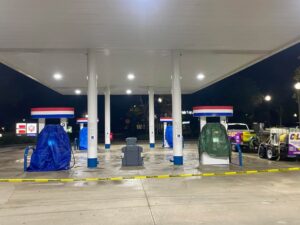
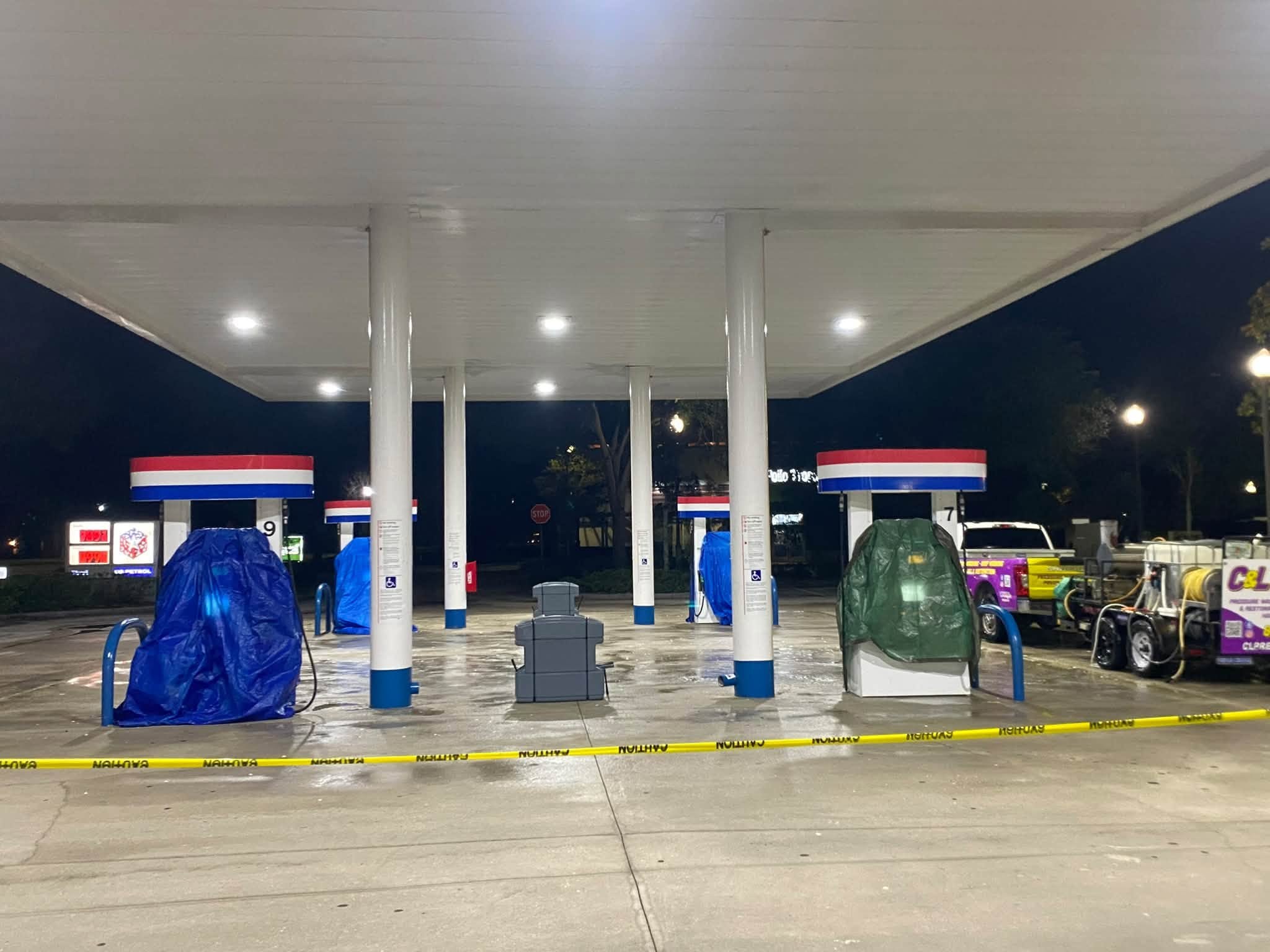
At C&L Pressure Washing Services, we’ve worked on commercial exterior cleaning projects in Central Florida, including a gas station property in Kissimmee where the job required after-hours work, attention to traffic, and protection of the fuel pumps.
These are important considerations for any property manager evaluating a commercial pressure washing contractor.
Can You Pressure Wash a Gas Station While It’s Open?
Yes, certain gas station cleaning projects may be performed while a business remains operational, but the cleaning plan must account for customer traffic, pedestrian access, fuel equipment, and site-specific safety requirements.
In many situations, scheduling cleaning during lower-traffic periods or after business hours is preferable. The right schedule depends on the property layout, cleaning scope, equipment involved, and the owner’s operating requirements. A professional contractor should work with property management to establish a plan before equipment arrives.
Why Gas Station Cleaning Is Different From Regular Pressure Washing
Think about the surfaces found around a typical gas station. There may be concrete fueling lanes, sidewalks, entrances, curbs, parking areas, storefront windows, and exterior walls. Each surface can accumulate different contaminants.
Fueling Areas
Fueling lanes may develop oil stains, tire marks, dirt, and other vehicle-related residue. These areas also contain sensitive equipment and potential safety hazards. Cleaning around fuel dispensers requires particular care.
Convenience Store Entrances
High foot traffic can leave concrete walkways and entry areas visibly dirty. Food and beverage spills, tracked-in dirt, and organic buildup can also affect appearance.
Parking Areas and Curbs
Vehicles can leave oil residue and dark tire marks. These areas may require a different cleaning approach from building siding or painted surfaces.
Exterior Building Surfaces
Dirt, algae, mildew, and environmental buildup can affect exterior walls, especially in Florida’s humid climate. Appropriate cleaning methods depend on the material and its condition.
Our Experience With a Commercial Gas Station in Kissimmee
One of the challenges on a recent C&L commercial cleaning project in Kissimmee was working around the property’s operational needs. The job required after-hours scheduling, consideration of vehicle traffic, and protection of the fuel pumps.
Those requirements illustrate why commercial exterior cleaning involves more than choosing a pressure washer and beginning work. The cleaning contractor must understand the property layout, communicate with management, and account for the risks associated with the work area.
For gas stations, this planning is especially important because of the proximity of customers, vehicles, fuel dispensers, and drainage systems. Our experience with commercial properties has reinforced the importance of reviewing site conditions before establishing a cleaning plan.

Why After-Hours Commercial Pressure Washing Can Make Sense
For many busy commercial properties, the most practical cleaning window is when customer activity is reduced. After-hours scheduling may help:
- Reduce interference with normal business operations.
- Limit the number of pedestrians entering active work areas.
- Allow more efficient access to selected surfaces.
- Make it easier to coordinate temporary work-zone restrictions.
- Reduce inconvenience for customers and employees.
However, working after hours doesn’t automatically eliminate safety concerns. Adequate lighting, property access, equipment restrictions, and communication with site management still matter. Some businesses operate 24 hours a day, so work may need to be completed in carefully coordinated sections.
Protecting Fuel Pumps and Other Equipment
One of the most important parts of planning gas station pressure washing is understanding what should not be exposed to water or cleaning solutions. Fuel dispensers, electrical components, signage, and other sensitive equipment require appropriate precautions.
Cleaning procedures should follow applicable equipment manufacturer instructions and site safety requirements. A contractor should not assume that because a piece of equipment is outdoors, it can tolerate direct pressure washing.
Before work begins, the contractor and property representative should identify sensitive equipment, restricted areas, and any necessary shutdown or access procedures.
What About Oil Stains on Gas Station Concrete?
Oil stains are common in vehicle-heavy environments, but they can be difficult to remove completely. The result depends on several factors, including:
- How long the stain has been present.
- The type of contaminant.
- The porosity and condition of the concrete.
- Whether the substance has penetrated deeply.
- Previous cleaning attempts.
Professional degreasing and hot-water cleaning may improve many oil-stained areas. However, even after treatment, some concrete can retain visible shadowing or discoloration. Property managers should be cautious of contractors promising that every stain will disappear completely.
What Happens to the Dirty Wash Water?
This is an important question for commercial property owners. Gas station wash water may contain oils, detergents, sediment, or other contaminants.
Depending on the site and local requirements, collection, containment, and appropriate disposal measures may be necessary. Contractors should evaluate drainage conditions and comply with applicable environmental and wastewater requirements. Dirty wash water should not automatically be directed into storm drains.
How Often Should a Gas Station Be Pressure Washed?
There is no universal cleaning schedule for every gas station. A high-volume location near a major roadway may accumulate contaminants more quickly than a smaller neighborhood station. The appropriate frequency depends on:
- Daily vehicle traffic.
- Fueling activity.
- Food and beverage spills.
- Existing stains.
- Property appearance standards.
- Seasonal weather.
- Available maintenance budgets.
Some properties benefit from routine maintenance cleaning, while others need targeted services based on visible buildup. For commercial properties, a recurring maintenance plan may help prevent cleaning needs from becoming larger and more expensive projects.
What Should Property Managers Ask Before Hiring a Contractor?
Before selecting a gas station pressure washing company, ask about its commercial cleaning experience. Important questions include:
Can you work around our operating schedule? The contractor should understand your busiest hours and access restrictions.
How will you protect our fuel equipment? There should be a clear plan for sensitive equipment and restricted areas.
What is your approach to traffic and pedestrian safety? Active cleaning areas should be appropriately managed.
Can you provide documentation of your insurance? Request current insurance information appropriate to the work.
How will you handle wastewater? The contractor should explain how it will address drainage and applicable disposal requirements.
What results are realistic for older oil stains? A trustworthy contractor should explain potential limitations before cleaning begins.
Frequently Asked Questions About Commercial Gas Station Cleaning
Can gas station concrete be cleaned with hot water?
Hot-water pressure washing can be useful for certain oil and grease deposits on suitable concrete surfaces. However, its use must be compatible with the site, equipment, and safety requirements.
Can a gas station remain open during pressure washing?
Sometimes. Cleaning may be coordinated in sections, depending on customer traffic, access, and site conditions. Other projects may require temporary closures of selected areas.
Will pressure washing remove every oil stain?
No. Deeply absorbed oil and older staining may leave residual discoloration even after professional treatment.
Do commercial pressure washing companies offer after-hours cleaning?
Some do. C&L Pressure Washing Services has experience performing commercial cleaning work after hours when project requirements call for it.
Commercial Pressure Washing Services in Kissimmee and Central Florida
Commercial exterior cleaning requires planning, communication, and an understanding of how the property operates. Whether you manage a gas station, retail center, restaurant, office building, or another commercial facility, your cleaning contractor should consider more than the appearance of the finished surface.
C&L Pressure Washing Services is a family-owned exterior cleaning company based in Auburndale, Florida. We provide commercial pressure washing and exterior cleaning services throughout Central Florida, including Kissimmee, Orlando, Polk County, and the Tampa area.
Our services include commercial concrete cleaning, building washing, exterior window cleaning, and other specialized exterior maintenance services.
Need commercial exterior cleaning without unnecessary disruption to your business? Contact C&L Pressure Washing Services to discuss your property, scheduling requirements, and cleaning needs.